How to Tackle Your Semi-Annual Clothes Swap

I know it is spring because I have been helping a number of my clients organize their bedroom closet. We have been doing the semi-annual seasonal clothes swap.  Once it is done, everyone breathes a sigh of relief, but getting started can be stressful. Here are some questions to ask yourself before you just pack everything away for the summer.

  • Did I wear it? If you never wore it this past winter, it is a great candidate for the donation pile. A great trick I like using is to hang my items with the hanger backwards so that it is very easy to spot the items that never left their hanger. When I wear an item and put it back clean, the hanger is placed in the normal position. When it is time to pack it away, you can’t help but see that you never wore it. Our memory may fade, but that would serve as 100% proof that a garment wasn’t worn.
  • Is it clean? Make sure all your items are clean before packing them away. Bugs love to chomp on left over food crumbs or dead skin, so make sure you have washed or dry-cleaned your items first.
  • Does it need to be repaired? Now is the time to sew on the button or go to the tailor before you put away your winter clothes. By so doing, in 6 months when you want to wear that item, it is ready to wear.  If the item is beyond repair or not worth being repaired, let it go.
  • Will it be in style next season? If you care about trends and know that its time has come and gone, don’t pack the item away. Donate it, and perhaps treat yourself to a new trend for this season.

Tips on How to Manage Your Time

Where is My Time Going?

We all have the same amount of time in a day, yet why are some people able to get it all done? Well, they tend to use a calendar or daily planner and block time out to do so. Here are some other tips:

  • Know your most productive time of the day. Are you a morning person and love to get items crossed off your list so that you can enjoy the rest of the day and tackle unplanned interruptions? Or do you do better after lunch when you know you have a crunch time before the kids come back home or it’s quitting time at work? For you, it may be easier to get the phone calls and emails out of the way and focus on the real tasks after the mundane is done.
  • Write it down. Plan how you will spend your time each day. Looking at your calendar will avoid overscheduling and double booking. Take your action list and write down in your calendar when you will accomplish those tasks.
  • Prioritize. Not every item on your list is time sensitive. Look at your list and choose the most important tasks. Do them first! Less important tasks may suck too much time out of your day, and then you will be rushing to get the time sensitive tasks done.
  • Practice saying no. If asked to do something that isn’t in line with your goals, it is OK to say no. Don’t let others guilt you into saying yes. Your time is valuable, and having and using a calendar that is planned out will help you know that you may not have time to take on another project.
  • Watch out for distractions. When working on your tasks, silence your phone, shut off your computer, and close your door. Make sure you are able to concentrate and get to the task at hand. If you need to change locations to help avoid tempting distractions, do it!

Managing your time will help you not only get more done but also help you feel more in control of you time and how you choose to spend it.

How to Keep Your 2013 Goals/Resolutions

Happy New Year!  We are already well under way in 2013, and I hope that if you made any New Year’s resolutions, you didn’t make them so grandiose that they have already been broken. We are going to talk about some ways to ensure your success in whatever your goals/resolutions are for this year.

  1. Make them specific and obtainable.
  2. Choose no more than three.
  3. Write them down.
  4. Read them out loud at least once a day. Believe that you will accomplish your goals when you say them.
  5. Re-evaluate them after 2 months.

If one of your goals/resolutions is to pay your bills on time to avoid late fees, to be on time for meetings and appointments, to finally create order out of your piles of paperwork, and/or to maintain an organized kitchen/bedroom/office (you fill in the room or area), call Resolutions. Together we will work to make your goal/resolutions a reality for 2013!

How to Organize Your Kitchen

This is the time of year where we are more likely to find ourselves in the kitchen baking and whipping up cauldrons of soups and casseroles. Having the oven on is a great way to help warm up the house and make it smell yummy. A more organized kitchen really does make the time you spend in your kitchen more enjoyable.

Here are a few tips to make your kitchen more functional:

  1. Group together commonly used items for purposes such as baking and assign them a home.
  2. Organize your space by use. Keep the items you use most frequently in your prime real estate area. Keep less frequently used items like holiday & entertaining pieces up higher or stored outside of the kitchen if space is at a premium.
  3. Set up zones near the devise being used. For example, store your cookware near the stove and all your coffee and related items near the coffee maker.
  4. Contain your plastic storage. Keep only matched tops and bottoms, and store them together to make it easy to grab for leftovers.
  5. Put like with like in your pantry just as you see in the grocery store. It makes food prep and shopping lists a breeze.

Organizing for Summer Vacation: Road Trip Tips

Here are some tips to help you as you are organizing a summer road trip:

  • Make sure your car has been properly maintained. You don’t want any interruptions in your road trip because you failed to get your oil changed or checked your tire pressure.
  • Even if you do have a GPS device, it is not a bad idea to also have a detailed map for your travels. How annoying is it when your GPS can’t find your location and you end up driving blind?
  • Get rid of junk in your car. Spend the time getting rid of any accumulated trash, papers, water bottles, and other items that aren’t needed on your trip. How nice will it be to start the trip with a clean slate? Remember you are in tight quarters, so every inch counts.
  • Plan for boredom. Hopefully it won’t happen, but just in case, have a bag of games or activities so that the entire car can participate. A favorite one is having everyone look for state license plates. Print out a list all the states, and cross them off as you see them. How about audio books geared toward your final destination?
  • Be prepared for the unexpected. Bring a weather radio so that you can track a storm or weather pattern. Make sure your phone is charged in case you need to call for help. (Not a bad idea to make sure you have a car charger for your phone) Always lock your car even if you just step away for a second. Have a spare set of car keys made and give them to someone else in your party.

May is National Moving Month

We are heading into the summer months and this is a popular time of the year for families to move. The kids are out of school, so there are fewer interruptions in their lives and, if moving out of town, the transition is easier on them.

Moving can be stressful. If you make a plan and pack in an organized fashion, you really can alleviate a lot of headaches. Here are a few tips to help you pack for a move:

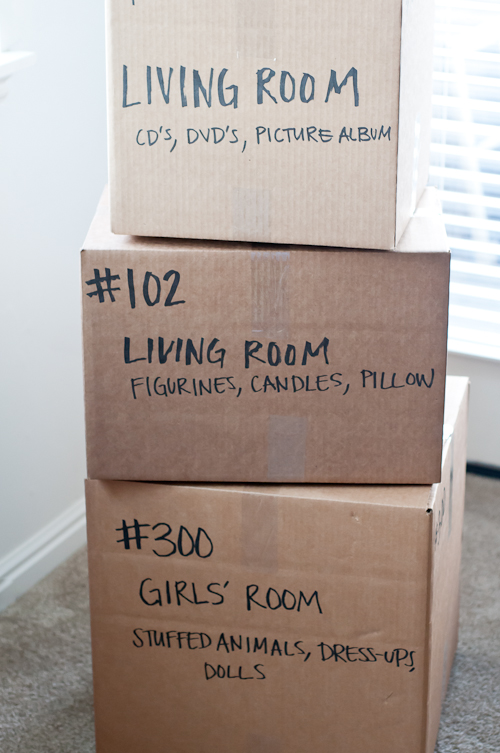
1. Label at least 2 sides of each box. Label the long and short sides of the boxes. This way when the movers bring the boxes into your new space, you can ask them to make sure the labels face out and therefore, depending on how they stack them, the boxes will either have the label on the short or long side facing out.

2. Be specific when labeling. Don’t just write ‘Kitchen’ on all your kitchen boxes. That won’t be helpful when you are unpacking and looking for specific items like your pots & pans, drinking glasses, coffee mugs, or silverware.

3. Color coordinate your move. Choose a color for each room and then use that color label or dot for each box going into that room. Create a cheat sheet for yourself and the movers. Make a sign for each room with that color label or dot on it and hang it on the outside of the room so movers know what room you want the boxes and furniture to go into. For example,
kitchen = red, master bedroom = blue, office = green, etc.

4. Designate one area as packing central. Keep markers, packing tape, labels, colored dots, packing material, boxes, and other critical items together. When you are done packing for the day, make sure all items go back into that area.

5. You will always need more tape, boxes, and packing material than you think. Save your receipts and don’t skimp on supplies.

If you need help establishing homes and editing your belongings, call or email to set up an appointment. Resolutions is your Link to an Organized Future!

Top